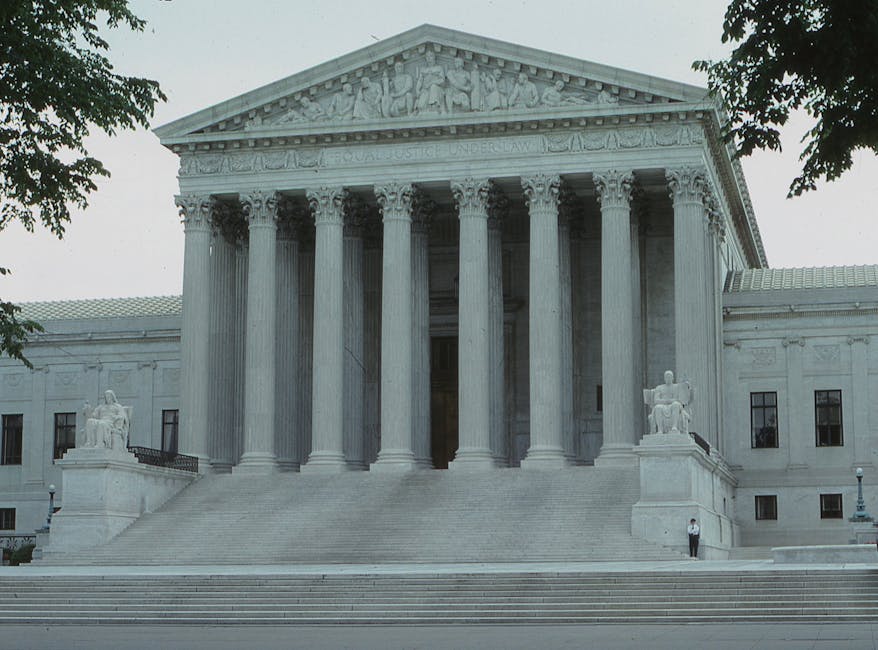
The Supreme Court will hear three landmark technology cases in its 2025-2026 term that could fundamentally reshape how Silicon Valley operates. These cases—addressing AI liability, platform immunity, and data privacy—arrive as Congress remains deadlocked on comprehensive tech regulation.
The timing is critical. Tech companies are racing to establish favorable legal precedents before potential federal legislation locks in stricter rules. Meanwhile, lower courts have issued conflicting rulings on everything from algorithmic bias to content moderation, creating a legal patchwork that the justices must resolve.
## AI Liability and Algorithmic Accountability
The Morrison v. OpenAI Case
The most watched case involves Sarah Morrison, whose mortgage application was denied by an AI system that allegedly discriminated based on zip code—a proxy for race. Morrison sued OpenAI, arguing their GPT model, licensed to the lender, violated fair lending laws.
The core question: When AI makes discriminatory decisions, who bears legal responsibility—the AI company that created the model, the business that deployed it, or both? OpenAI argues they provide general-purpose tools, like Microsoft selling Excel to a company that uses it for discrimination. Morrison’s lawyers counter that AI systems are fundamentally different because they make autonomous decisions with hidden biases baked into their training data.
Implications for Silicon Valley
A ruling favoring Morrison could expose AI companies to massive liability across industries. Consider the ripple effects:
– **Financial services**: Banks using AI for loan decisions face joint liability with AI providers
– **Healthcare**: Medical AI companies become liable for diagnostic errors alongside hospitals
– **Employment**: Hiring platforms like HireVue could face discrimination lawsuits for algorithmic bias
Tech executives are preparing for both scenarios. Meta has quietly restructured its AI division to limit parent company liability. Google is requiring enterprise customers to sign broader indemnification agreements. Smaller AI startups are purchasing expensive liability insurance policies that didn’t exist two years ago.
## Platform Immunity Under Section 230
The NetChoice v. Texas Battle
The second major case examines whether social media platforms can be forced to host content they don’t want. Texas passed a law prohibiting platforms with over 50 million users from removing posts based on political viewpoint. NetChoice, representing major platforms, argues this violates their First Amendment rights and Section 230 protections.
The case directly challenges the legal framework that built modern social media. Section 230 gives platforms broad immunity from lawsuits over user content while allowing them to moderate as they see fit. Texas argues this has created censorship monopolies that silence conservative voices.
The Economic Stakes
Content moderation costs Facebook approximately $5 billion annually. Twitter spent $500 million on trust and safety in 2021 before Elon Musk gutted those teams. If the Court limits Section 230 protections, platforms face two expensive options:
1. **Over-moderate**: Remove more content to avoid liability, risking user engagement and advertiser backlash
2. **Under-moderate**: Allow more harmful content, facing potential lawsuits and regulatory scrutiny
YouTube is already testing “liability-first” moderation in some states, automatically removing content that mentions specific keywords rather than human review. Early results show 40% more false positives—legitimate content incorrectly removed.
## Data Privacy and the Third-Party Doctrine
The third case, *Carpenter v. Amazon*, challenges whether law enforcement needs warrants to access detailed consumer data from tech companies. Police obtained two years of Maria Carpenter’s Amazon purchase history, Alexa recordings, and location data to prosecute her for insurance fraud—all without a warrant.
The case builds on 2018’s *Carpenter v. United States*, which required warrants for cell tower location data. But that ruling left huge gaps around other digital footprints. Amazon argues that customers voluntarily share data with them, eliminating Fourth Amendment protections under the “third-party doctrine.”
Business Model Disruption
A broad pro-privacy ruling could force fundamental changes in how tech companies collect and store data:
– **Advertising**: Targeted ads become harder without detailed user profiles
– **AI training**: Companies may need explicit consent for data used in machine learning
– **Cloud services**: Law enforcement access to business data requires higher legal standards
Google has spent $2.8 billion upgrading infrastructure to enable rapid data deletion if courts expand privacy rights. Apple is positioning its privacy-first approach as a competitive advantage, launching ads highlighting features like on-device processing.

## Preparing for Regulatory Reality
Smart tech companies aren’t waiting for Supreme Court decisions to adapt their strategies. Three trends are emerging:
**Regulatory arbitrage**: Companies are restructuring operations across state lines to take advantage of favorable local laws. TikTok moved its US data operations to Oracle’s Texas servers partly to navigate state privacy laws.
**Compliance technology**: The “RegTech” market for automated compliance tools has grown 300% since 2023. Companies like DataGrail and OneTrust help businesses navigate varying state laws around AI bias testing and data deletion requests.
**Political hedging**: Tech companies are diversifying their lobbying strategies. Instead of fighting all regulation, they’re pushing for federal preemption laws that override stricter state rules with more business-friendly national standards.
## The Path Forward
These Supreme Court cases will likely produce narrow rulings that leave many questions unanswered, forcing continued litigation and eventual congressional action. The justices historically move cautiously on technology issues, preferring to let lower courts and legislators work through details.
However, the economic pressure is building for clearer rules. Venture capital funding for AI startups dropped 23% in Q4 2025, with investors citing “regulatory uncertainty” as a primary concern. Public companies are setting aside larger legal reserves—Microsoft allocated $1.2 billion for potential AI liability in its latest 10-K filing.
The tech industry’s transformation is inevitable, but the Supreme Court will determine whether it happens through judicial precedent or congressional action. Companies that adapt their business models now, rather than fighting for the status quo, will be best positioned for the post-2026 regulatory landscape.